
Osceola County Arrest Records
An arrest in Osceola County can begin with the Osceola County Sheriff's Office, Kissimmee Police Department, St. Cloud Police Department, Florida Highway Patrol, or another agency with arrest powers. That agency keeps its incident and arrest narrative. Osceola County Corrections creates a separate booking entry when the person reaches the county jail at Simpson Road. If the State Attorney files charges, the Osceola Clerk opens a County Court or Circuit Court case. Each record answers a different question.
A booking record confirms that intake occurred. It does not establish guilt, and the arrest charge may differ from the filed charge. The current-inmate tool is also not a full historical index. Released people leave the live list after an update. For older events, request the agency report or jail record and compare it with the Clerk docket. That sequence gives a much sounder Osceola County arrest history than a single name result.
Keep the jail ID, arrest date, and agency name from the first result. Those details help connect an Osceola County booking to the right police request and court case. Common names can produce records for more than one person. Date of birth and middle name can help narrow results, but only fingerprints make a positive identity match. Never infer an outcome from charge text alone.
Save the official result or request response with its source and access date. Public screens can change after release, a later filing, a bond update, or a corrected disposition. A dated copy helps explain which facts were visible at the time and which office supplied them.
Osceola Arrest Reports Compared
Osceola County Corrections publishes both Daily Arrest Reports and a Current Inmate Population search. The daily report is organized around bookings on a selected date. The inmate search answers whether a person remains in county custody and is refreshed several times each day. Open a current result to inspect charges and bond data.
Use the daily report for a known arrest date. Use the live search for custody status. Neither is a complete lifetime arrest search, and neither replaces a police narrative. A released person can vanish from the current roster even though the booking file, agency report, and later court record still exist.
Looking Up Osceola County Arrests
Start with the narrowest official source. A full name helps, but a jail ID, report number, case number, arrest date, and arresting agency reduce false matches. Work through each channel when the first result does not settle the question.
- Check the county daily arrest report for a known date, or search the current inmate population when present custody is the issue.
- Request the narrative from the arresting agency. Use Sheriff Records only for sheriff-created material; city police hold their own reports.
- Search the Osceola Clerk court records by name or case number to see whether prosecutors filed charges and how the case progressed.
- Use the Florida Department of Law Enforcement CCHInet name search for reported Florida history, or FDLE Personal Review for your fingerprint-based self-review.
- When online data is missing, send a Chapter 119 request to the correct police agency, Corrections for jail records, or the Clerk for filed court documents.
Who Holds Osceola Arrest Reports
The arresting-agency field is the key routing clue. A Kissimmee mailing address may fall outside the city, so the place name alone does not prove that Kissimmee Police owns the report. Sheriff incidents go to Sheriff Records. Kissimmee and St. Cloud incidents go to their city police records units. Florida Highway Patrol keeps its own material. Osceola County Corrections holds booking and jail records regardless of which local agency made the arrest.
Osceola Sheriff Records
2601 E. Irlo Bronson Memorial Highway
Kissimmee, FL 34744
407-348-2222
Osceola County Corrections
402 Simpson Road
Kissimmee, FL 34744
407-742-4444
Give the custodian an incident number, date and time range, location, involved names, and the exact record or medium sought. Ask for a cost estimate when review may be extensive.
What Osceola Arrest Records Show
Osceola County booking data links intake details to the charges delivered to the jail. The public view may expose less than the retained agency file. Juvenile, victim, medical, active-investigation, and protected identifying information can be redacted or withheld under Florida law.
| Booking Number | The jail identifier used to distinguish the intake from another booking. |
|---|---|
| Booking Date & Time | When Corrections accepted the person into county custody. |
| Arresting Agency | The agency that owns the underlying arrest or incident report. |
| Charges | Initial booking allegations and counts, which prosecutors may later alter or decline. |
| Bond | Amount, type, or hold information available at the time of inspection. |
| Identifiers | Name, date of birth, sex, race, jail ID, and other public matching details. |
| Release Status | Current custody or release data, subject to the roster's update cycle. |
Osceola County Booking Sequence
The local path is straightforward but creates several files: arresting-agency report › Simpson Road booking › initial appearance › State Attorney charging decision › Clerk docket › disposition reported to FDLE. Corrections photographs and fingerprints the person at intake. Bond and hold data enter the booking record, while the first judicial review addresses probable cause, release, and conditions.
Initial charges are not fixed. The State Attorney can file a different offense, decline a count, or bring no case. The Clerk docket is therefore the better source for the filed charge and final outcome. FDLE can lag if identity details or dispositions have not yet moved through the reporting chain.
Note: Compare sources by their inspection dates because jail, court, and FDLE updates do not occur at the same moment.
Recent Osceola Arrest Bookings
The county Corrections hub, not the Sheriff's Office, is the official starting point for recent Osceola County bookings. Daily reports provide date-based snapshots, while the inmate population search updates several times daily and removes a released person on a later refresh. The tools can show booking identifiers, arresting agency, charge text, bond, and custody information.
The distinction matters because Osceola transferred jail operations from the Sheriff to the Board of County Commissioners in 1997. Calling Sheriff Records for a jail roster sends the request to the wrong custodian. Corrections also states that it cannot check warrants. For a warrant, use the Sheriff's dedicated line at 407-742-6515 and review the linked court docket.
Osceola County Corrections operates a 911-bed facility and reported an average daily population of 846 for 2025. Those figures describe jail operations, not the number of crimes or people convicted. A daily count changes with new intake, release, transfer, and court action. It should not be used as a crime rate.
The official Ninth Judicial Circuit image below represents the court layer that follows many bookings.
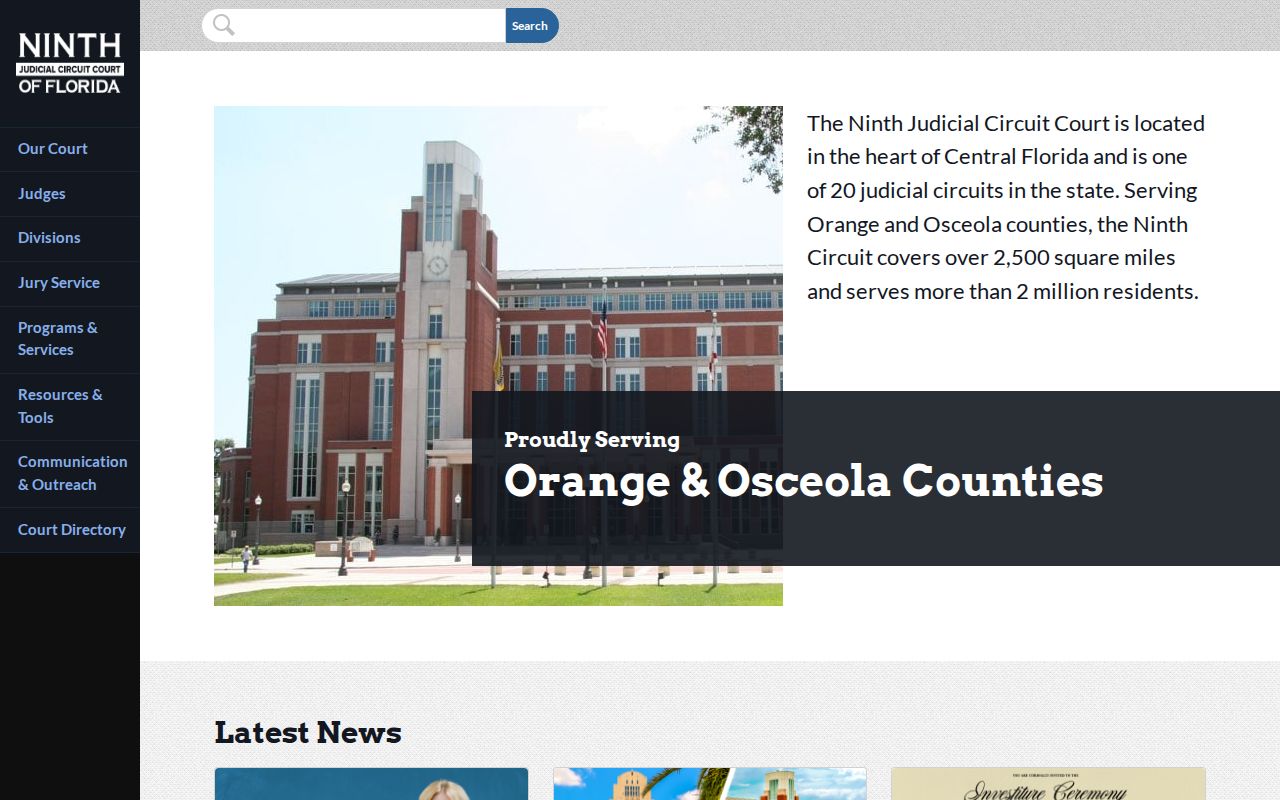
The court source helps separate a brief custody entry from the case that prosecutors later filed.
When Osceola Inmates Disappear
A no-result response from the current inmate tool often means release, not that no arrest occurred. First check the Daily Arrest Report for the expected date. Then request a jail record from Osceola County Corrections. Ask the named arresting agency for the report and search the Clerk portal by legal name, former name, and known case number.
If the case was dismissed, the arrest and booking record may still lawfully exist. Sealing or expunction requires a separate Florida process and is not automatic after dismissal. For an error on your own statewide record, use FDLE Personal Review and follow its challenge instructions.
For a local correction, first identify which record is wrong. The police agency corrects its report, Corrections addresses its booking data, the Clerk handles the court docket, and FDLE manages the statewide history. Send supporting documents to the custodian that created the disputed entry. A certified disposition can help when the statewide cycle lacks the final court result.
The FDLE personal-review source is shown here because fingerprints, not a common-name match, support positive identification.
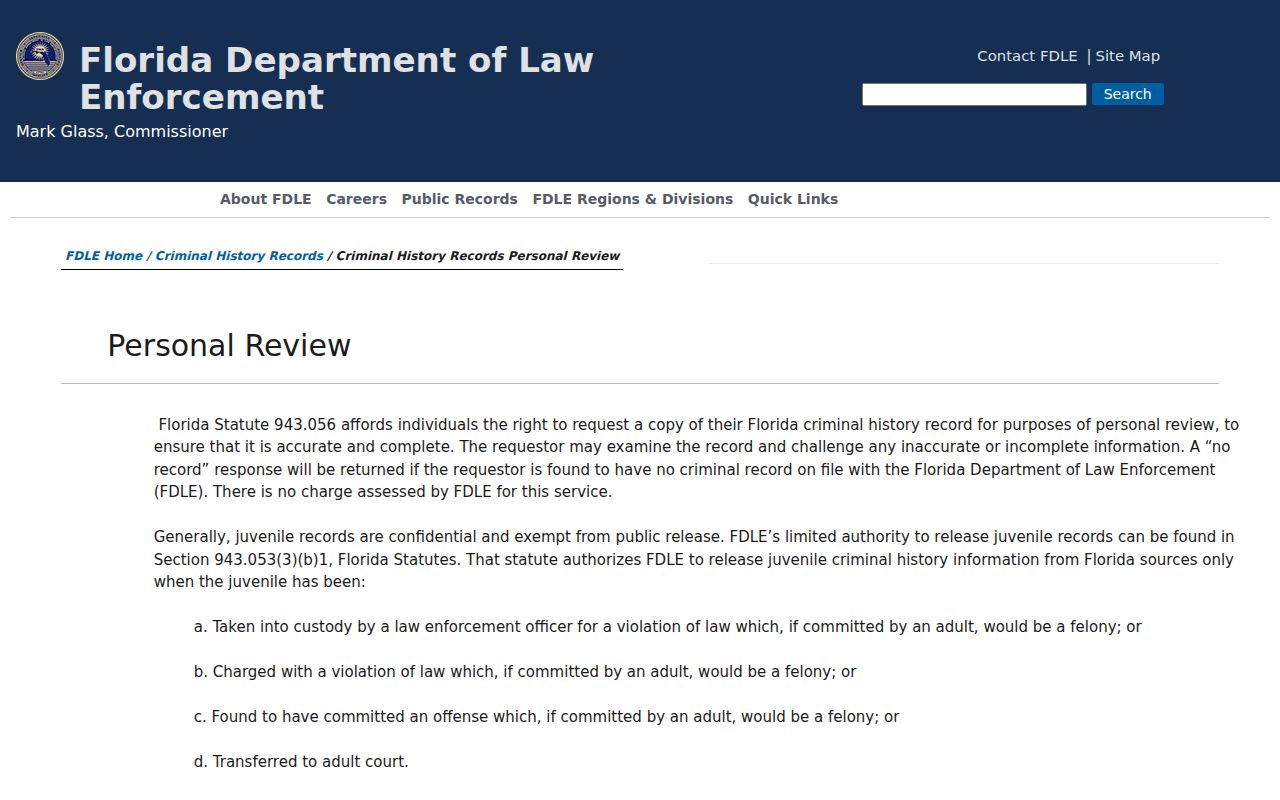
That statewide self-review complements local Osceola booking, police, and court records rather than replacing them.
Osceola Arrests Reach FDLE
Fingerprints and charge data move from the arrest cycle into Florida's Computerized Criminal History system. The Clerk later reports dispositions. A fresh Osceola County arrest may thus appear in jail data before a filed case or complete FDLE cycle exists. Missing disposition data, mismatched identifiers, agency delay, or restricted records can also create an incomplete view.
The FDLE Criminal History Records source below explains the official state channels.
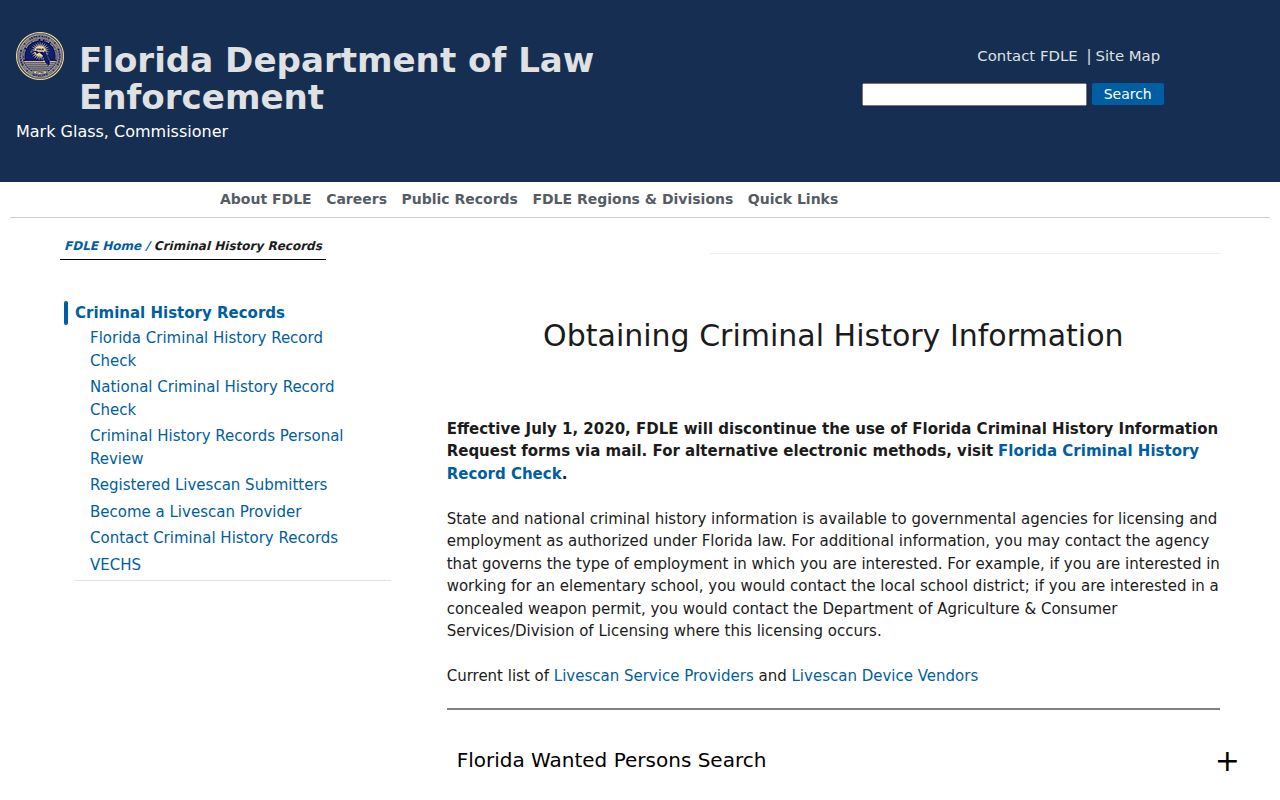
CCHInet is a paid name search and is not fingerprint-confirmed. A self-review based on fingerprints provides stronger identity assurance.
The Ninth Circuit State Attorney source shows the prosecutor's place between booking charges and filed charges.

Its charging decision is one reason a booking allegation and the eventual court count may not match.
Osceola Arrests vs Convictions
An Osceola arrest record begins with police action and county intake. A conviction requires a court judgment after a plea or finding of guilt. Acquittal, dismissal, a prosecutor's decision not to proceed, or a changed charge can all follow a booking. Read the Clerk docket before describing any outcome.
Useful docket terms include disposition, the outcome of a count; nolle prosequi, the prosecutor's formal choice not to continue; and adjudication withheld, a Florida result that is not the same as dismissal. Each count can end differently. Review the judgment and sentence rather than relying on a case status label alone.
| Arrest Record | Conviction Record |
|---|---|
| Created by the arresting agency and Corrections | Entered by the trial court and maintained by the Clerk |
| Shows arrest and booking occurred | Shows a judgment based on guilt |
| Lives in police and county jail systems | Lives in the Clerk case and reported state history |
| May lead to release, no filing, or dismissal | May lead to sentence, appeal, sealing, or expunction review |
Note: An Osceola County arrest is not proof of guilt, and the booking charge must not be reported as a conviction.