
Checking Osceola County Criminal History
Begin an Osceola County criminal history search with the record that answers the question. The Osceola Clerk Court Records Search is the best first stop for filed felony, misdemeanor, and criminal traffic cases. It shows case events and dispositions rather than current jail status. The County Corrections inmate search answers who is held now, while daily arrest reports preserve a date-based view of new bookings. A report narrative remains with the Sheriff, Kissimmee Police, or St. Cloud Police, depending on which agency made the report.
Gather the full legal name, likely date range, and any known case or incident number. Try former names separately. A case number is safer than a common name because it ties the query to one court file. Date of birth and other identifiers help with FDLE results, yet a name match is not positive identification. Fingerprints provide that higher level of certainty.
- Choose the Clerk for a case, Corrections for custody, or the arresting agency for an incident report.
- Search by case number when known. Otherwise, enter the legal name and narrow by date.
- Compare identifiers and record the source and search date.
- Open the docket, booking detail, or agency response instead of relying on the result list.
- Order a certified copy or use FDLE personal review when an official or identity-confirmed result is needed.
Search Osceola County Court Records
The Clerk portal offers party-name and case-number routes. Its labels may change, but the practical controls remain stable. County code 49 appears in Osceola case numbers. “CF” commonly marks a felony case, while “MM” commonly marks a misdemeanor. Date ranges and criminal categories can reduce a long list. Once a case opens, review each count separately because one count may be dismissed while another ends in a plea or judgment.
| Field | Use | Best practice |
|---|---|---|
| Party name | Find cases tied to a person | Try legal and former names |
| Case number | Open one exact file | Use the full county-formatted number |
| Case category | Limit results | Select criminal when offered |
| Filed dates | Narrow a time span | Use the known offense or filing year |
The manifest capture from the Florida Appellate Case Information System shows a separate appellate search layer.
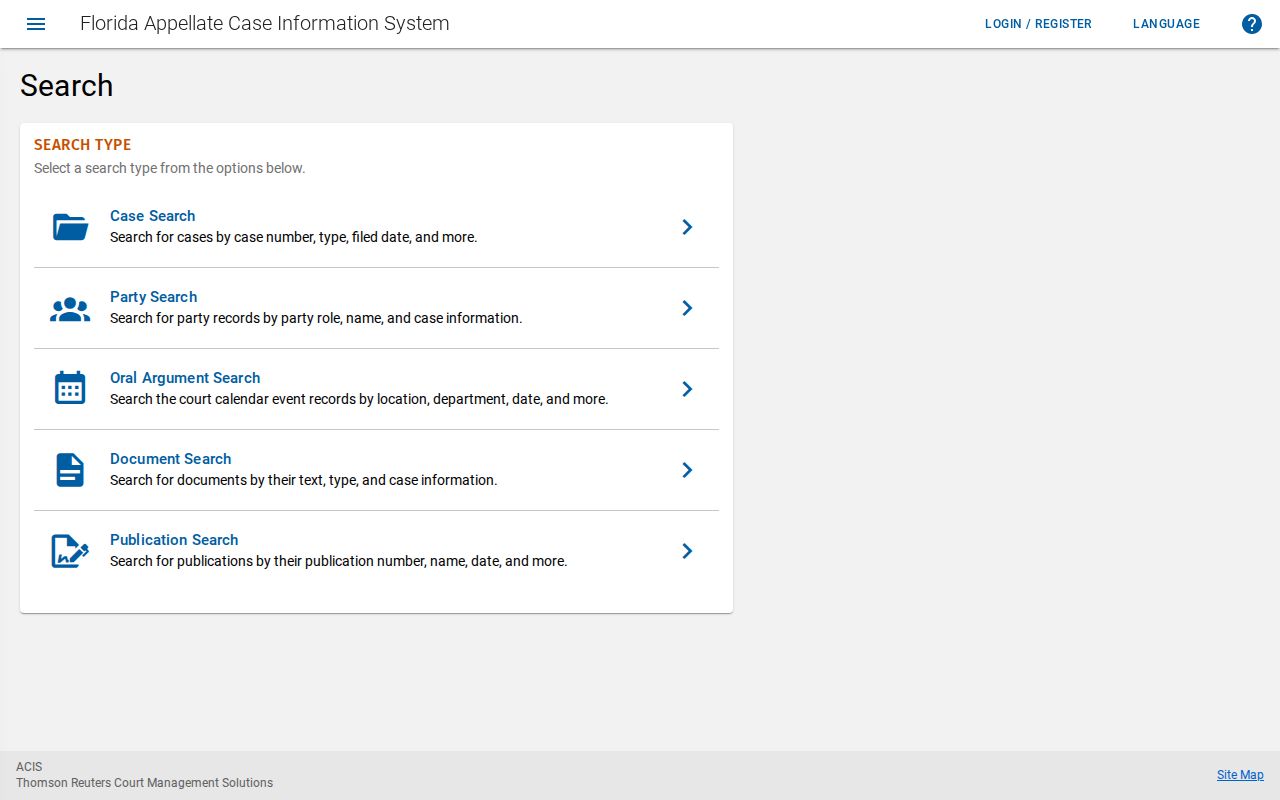
ACIS covers the Florida Supreme Court and district courts of appeal. It does not replace the Osceola trial-court docket.
Florida Official Background Checks
The Florida Department of Law Enforcement, Criminal Justice Information Services, maintains the state's central criminal-history repository. Its CCHInet public search costs $24 plus a $1 credit-card processing fee. It searches reported Florida history by name and demographics. It is broader than one Osceola County case search, but it is not a fingerprint-confirmed identity and does not reproduce every pleading in the Clerk's file.
For self-review, follow the FDLE personal-review process. Florida uses electronic Livescan submissions through approved providers and participating agencies. The correct ORI and purpose code matter. Provider prices and hours vary, so confirm them before an appointment. A federal self-review runs through the FBI Identity History Summary process and requires fingerprints.
The official FDLE CCHInet interface illustrates the statewide name-search route.
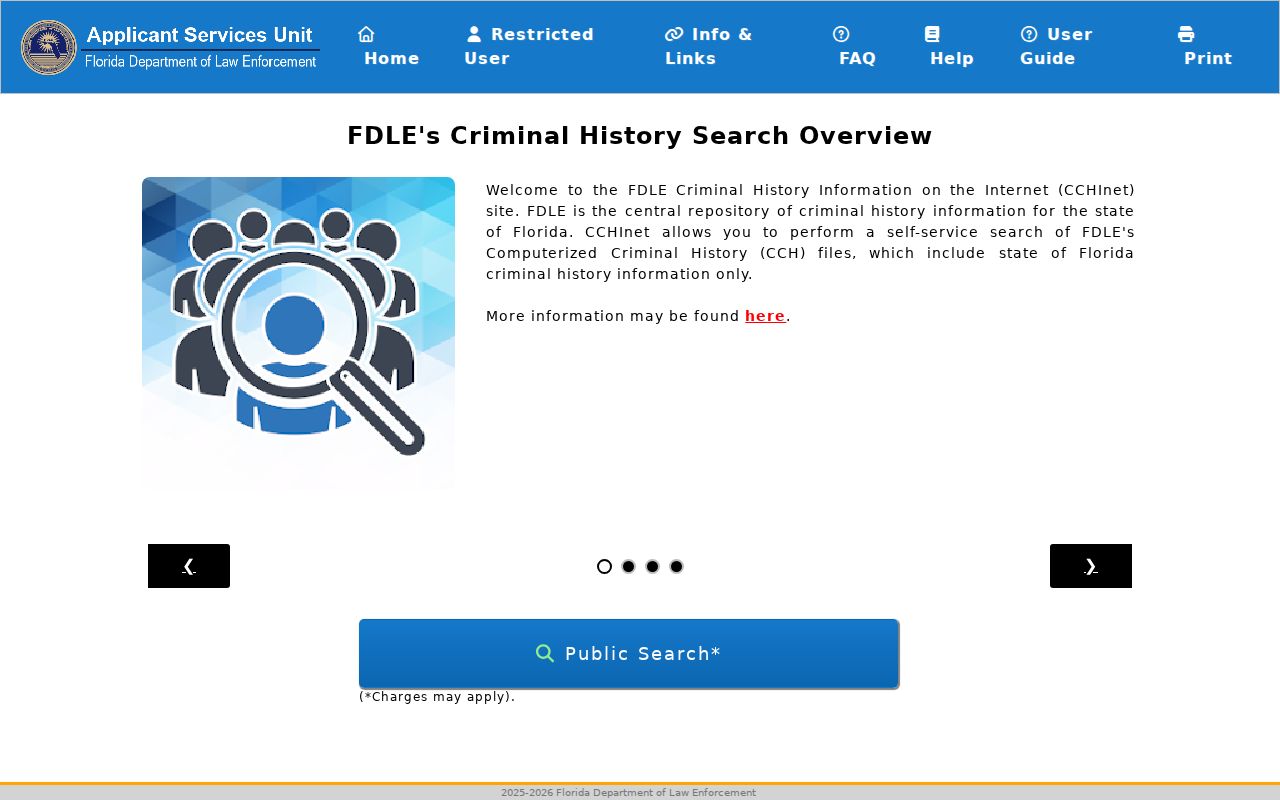
Use the identifying fields with care, then compare any possible match with the Osceola court record.
Osceola County Jail Record Custody
Osceola County has a local routing rule that trips up many searches. The Board of County Commissioners, not the elected Sheriff, operates County Corrections and its booking systems. Jail operations transferred from the Sheriff's Office on March 1, 1997. Corrections therefore controls the current inmate population, daily arrest reports, jail record requests, bond services, and custody details at the 911-bed facility on Simpson Road.
The Sheriff's Office still creates reports for incidents handled by deputies and maintains its own public-record channel. It also handles local warrant inquiries through 407-742-6515. Corrections expressly cannot perform warrant checks. The arresting-agency field is the safest clue when choosing between the Sheriff, a city police department, Corrections, and the Clerk.
The Osceola Corrections and Jail Services hub gathers the county custody channels.
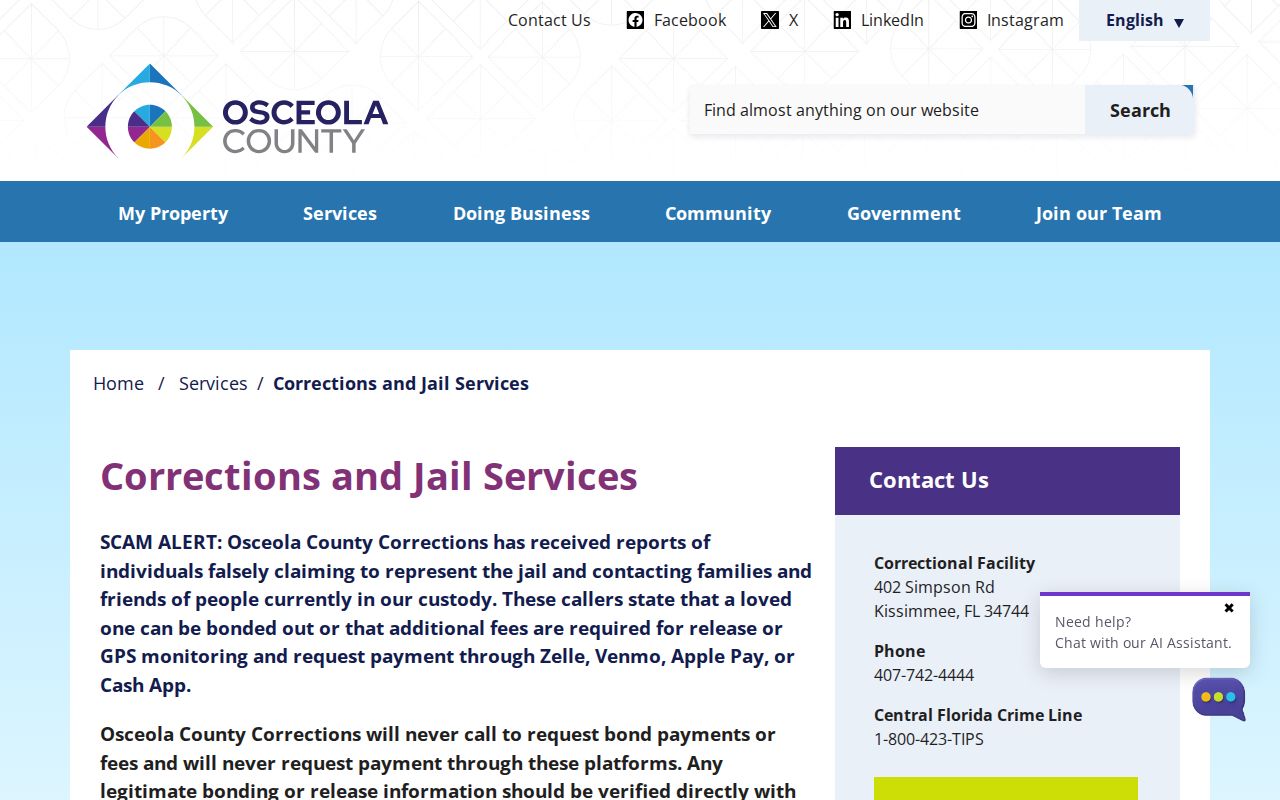
That county page is the proper source for booking and jail services, while police narratives remain with the arresting agency.
Criminal Record Types
An Osceola County criminal record is not one file. Each agency creates a product for its own task, and the meaning changes with the custodian. The police report records an alleged event and officer action. Corrections creates a booking entry at intake. Prosecutors decide what charges to file, and the Clerk preserves the court docket and documents. FDLE later compiles reported arrest and disposition cycles into statewide history.
- Incident and arrest report: held by the Sheriff or city police agency that created it.
- Booking record: held by Osceola County Corrections and focused on intake, charges, bond, and custody.
- Court case file: held by the Clerk, with counts, hearings, documents, outcomes, and sentence.
- State criminal history: compiled by FDLE from reported Florida arrest and disposition data.
- Warrant and supervision records: split among the court, Sheriff, County Corrections, FDC, and state review bodies.
Registry entries are another distinct product. They publish facts required by sex-offender law, not a person's full history.
Search Osceola County Jail Records
The current inmate population is updated several times each day. A person drops from that screen on the update after release, so a no-result does not prove there was no booking. Search fields include name and jail identifiers, while the detail view can show booking data, charges, bond, release information, court details, and housing-related custody fields.
The county's official current-inmate capture shows the live Osceola County criminal records tool.
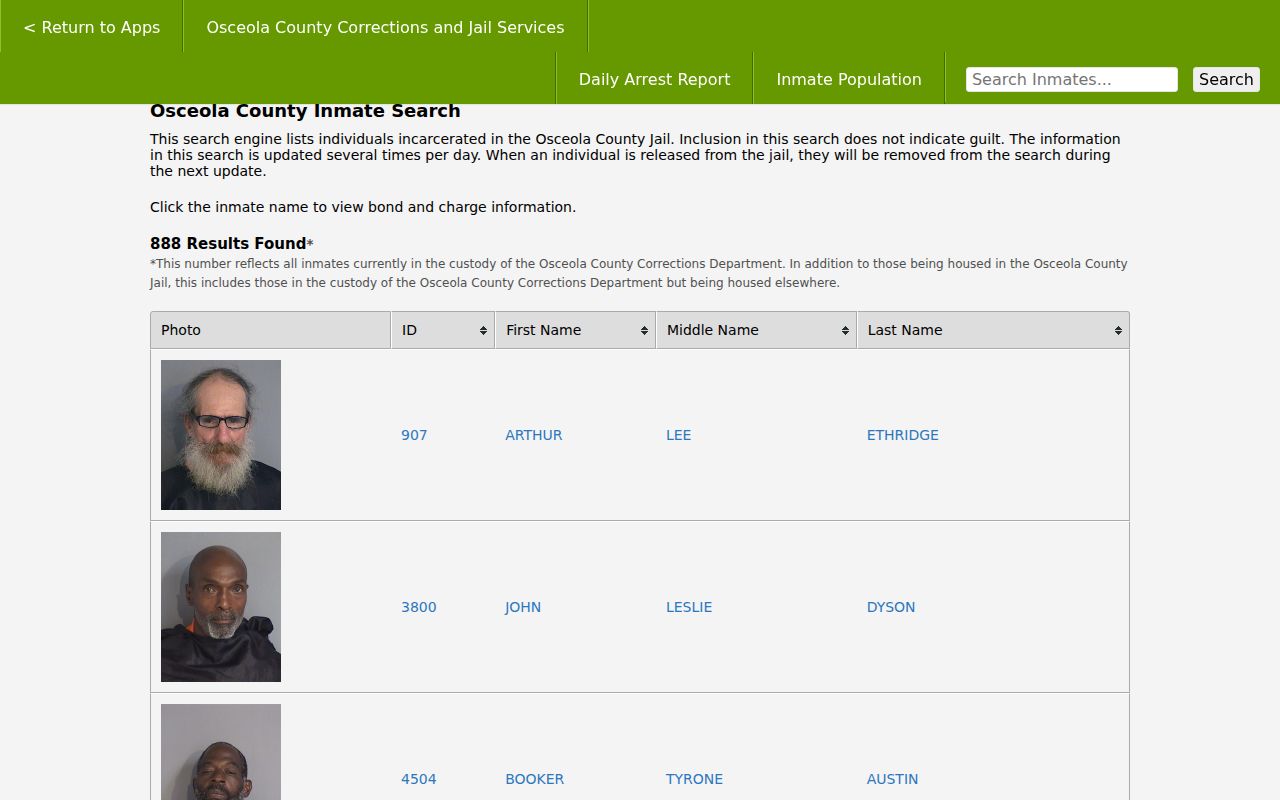
For a past arrest, move to the dated Daily Arrest Report, request the booking record from Corrections, and check the Clerk once a case is filed.
If release or transfer makes the person vanish, call Corrections at 407-742-4444 and use Florida VINE for custody notifications. VINE is a notification layer, not a complete historical jail file.
Inside an Osceola County Criminal Record
The field set depends on the source. A Florida history centers on identity and arrest cycles. An Osceola docket centers on a case and its counts. A booking profile centers on custody. Read the labels before comparing results, and never treat a charge as the final disposition.
| Name & Identifiers | Legal name, aliases, birth data, sex, race, and agency or fingerprint identifiers when released. |
|---|---|
| Arrest / Booking Data | Agency, arrest and intake dates, jail ID, initial charges, bond, and custody status. |
| Charges & Statutes | Each count, offense description, degree, dates, and cited Florida law. |
| Disposition | The result for each count, such as dismissal, nolle prosequi, plea, acquittal, or adjudication. |
| Sentence | Custody, probation, fines, costs, restitution, and other court terms when public. |
| Custody / Supervision Status | County jail status, FDC prison or felony supervision, and county probation where applicable. |
Order Osceola County Case Records
When the portal lacks an image or an older file, use the Clerk's Criminal Records Document Request. Supply the complete name used at arrest, case number if known, years to search, requested document or certification, and return details. Send it to recordsrequest@osceolaclerk.org, fax 407-742-3610, or mail the Clerk at 2 Courthouse Square, Suite 2000, Kissimmee, FL 34741. Staff provides the charge before work begins. Allow 7 to 10 business days.
| Service | Published fee |
|---|---|
| Search per year, per name | $2.00 |
| Copy per page | $1.00 |
| Certification per document | $2.00 |
| Certified letter | $7.00 |
| Fax per page | $0.50 |
The search covers Osceola cases and excludes sealed or expunged records. Cash and money orders are accepted; personal checks are not.
Florida Public Access Laws
Florida Public Records Law gives broad access to state and local records, but it does not erase statutory exemptions. Ask the office that created the record: the arresting agency for its report, Corrections for booking material, and the Clerk for filed cases. Agencies may redact protected victim, juvenile, medical, investigative, and identifying details while releasing separable public portions.
Key Statutes:
Florida Constitution article I, section 24 establishes the public right to inspect and copy government records, subject to exemptions.
Chapter 119, Florida Statutes governs requests, inspection, copying, fees, and exemption handling.
Florida Statutes section 943.053 controls FDLE dissemination of criminal-justice information.
Florida court rule 2.420 defines public and confidential court records.
How Osceola County Arrest Records Change
An Osceola arrest starts several files. The arresting agency creates the report. County Corrections books the person and records the charges delivered at intake. Fingerprints and related data travel through Florida's justice network to FDLE. The State Attorney may then decline, replace, or amend the initial charge. If prosecutors file, the Clerk opens a County Court or Circuit Court case and later reports the disposition.
Report → Booking → Prosecutor Review → Court Filing → Disposition → FDLE Update
Timing explains many mismatches. A new case may not yet appear, or FDLE may not yet show the final outcome. Compare the Clerk docket with the statewide record before seeking a correction. For jail operations, the Corrections Department directory gives the county's official institutional context.
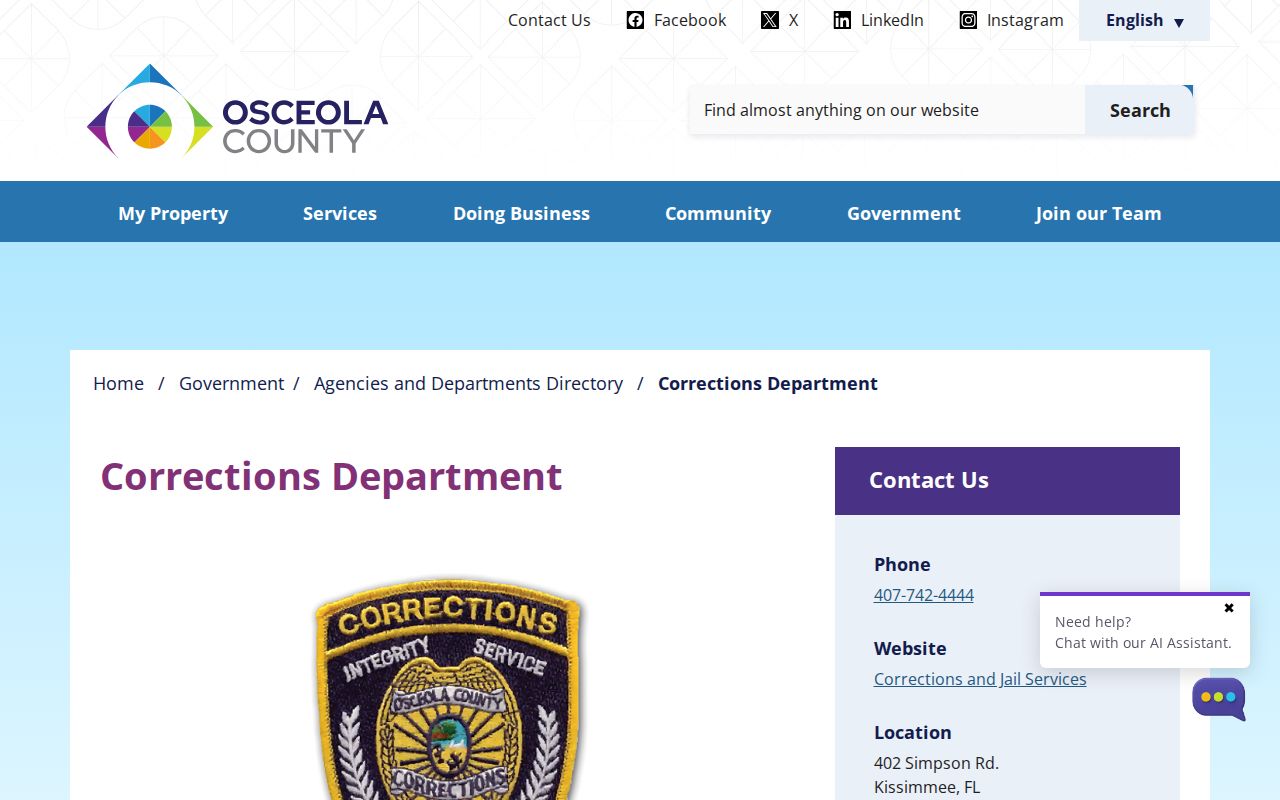
The department's separate county role is why booking questions do not route to the Sheriff's records counter.
Sealed, Expunged, and Restricted Records
Florida distinguishes sealing from expunction. A sealed record remains available to specified authorized agencies but is hidden from ordinary public access. Expunction directs custodians to destroy or remove qualifying records, while FDLE keeps a limited confidential entry under statutory rules. A dismissal does not make either remedy automatic.
Start with a certified disposition for every count. Apply to FDLE for a Certificate of Eligibility with the required fingerprints and certified material, then petition the Osceola court if the certificate issues. The court order, not the certificate alone, directs the ordinary remedy. Eligibility and disclosure exceptions depend on the full record and offense.
Juvenile records, victim details, medical data, and active investigative information can also be restricted under separate rules. A missing public result may therefore reflect law, timing, or access limits rather than proof that no record exists.
Find Osceola County Supervision Records
County jail custody and state prison custody are separate. The FDC Corrections Offender Network covers Florida prison records and state community supervision. It may show names, identifiers, offenses, sentence data, facility, release information, and supervision status. A new county detainee usually will not appear there unless the person also has an FDC record.
The manifest image from the FDC Offender Search shows that statewide custody layer.
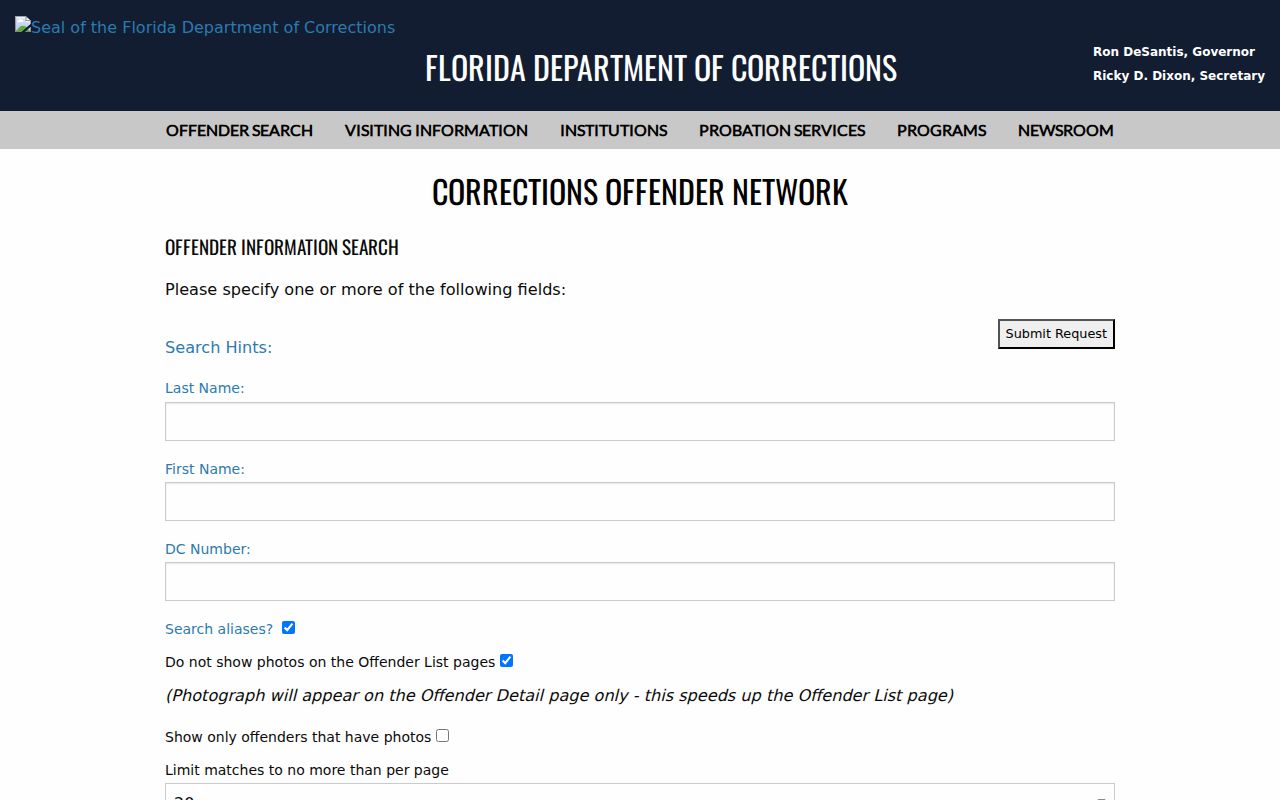
For parole and conditional release, the Florida Commission on Offender Review makes decisions, while FDC Community Corrections performs field supervision. Osceola County Corrections separately manages county misdemeanor probation and pretrial services.
Osceola County Warrant Registry Records
Warrant checks do not belong with the jail population search. Call the Osceola County Sheriff's dedicated warrant line at 407-742-6515, and inspect the related Clerk case for a capias or bench-warrant event. The FDLE Public Access System adds a statewide wanted-person channel, but it should not be treated as a complete list of every local court warrant.
Sex-offender records use the separate Florida Sexual Offender and Predator Registry. Search by name, county, city, ZIP, status, or address radius, then use the Florida profile for statutory detail. Registry listings support personal and community safety. They do not publish a complete criminal history or an individual risk score.
The official Florida registry search illustrates this distinct public record.
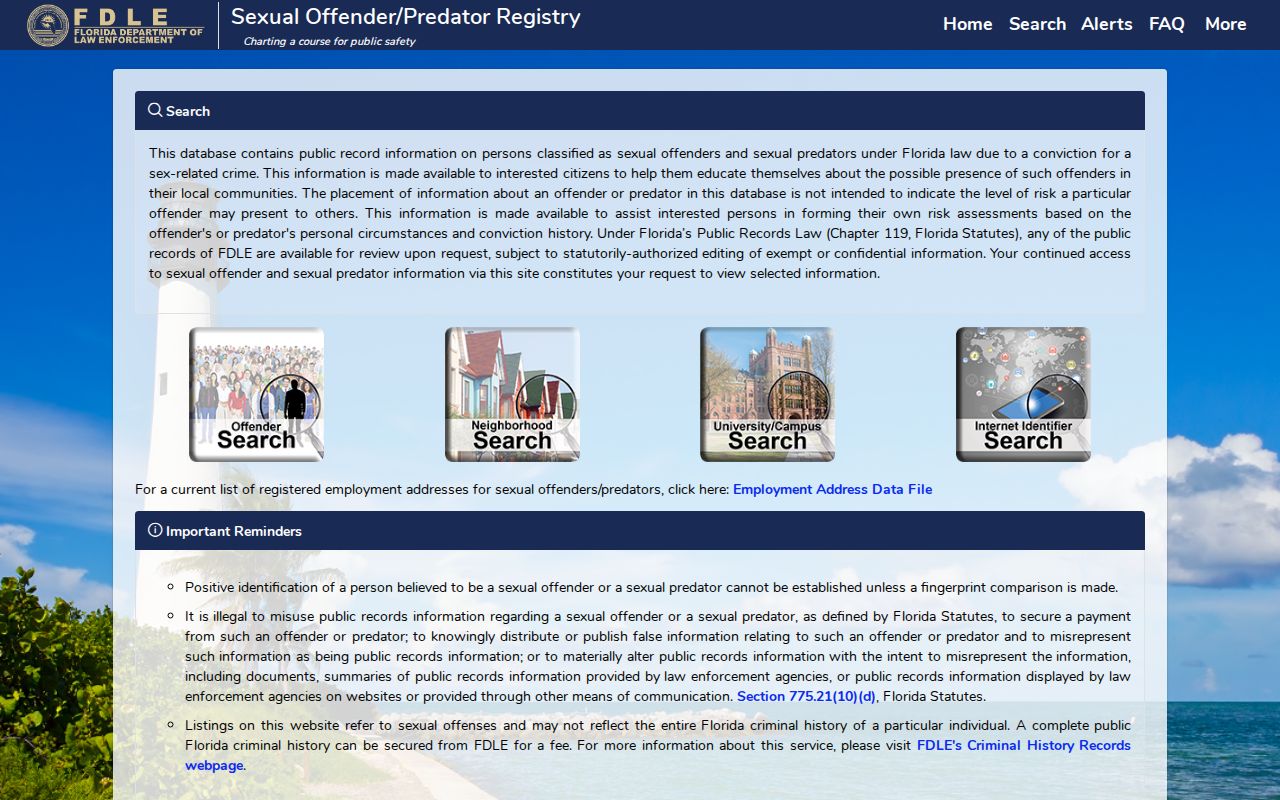
Use the profile link to report an incorrect address to law enforcement. Do not approach a listed person.
Osceola County Criminal Records by City
Osceola County has only two incorporated cities: Kissimmee and St. Cloud. Their police departments keep city-created reports, but neither city operates a separate criminal trial court. State misdemeanors and criminal traffic cases go to Osceola County Court, while felonies go to Circuit Court. City arrestees are generally booked at County Corrections on Simpson Road.
Kissimmee Criminal Records
84,756 · KPD keeps city reports; the Osceola Clerk holds filed criminal cases.
St. Cloud Criminal Records
71,036 · St. Cloud Police offers local checks; county courts hold criminal dockets.
Osceola County Criminal Records Offices
Use the office tied to the record. Courthouse Square holds the Clerk and court partners, Simpson Road holds jail operations, and the Sheriff's headquarters holds sheriff-created reports. This split replaced the older system in which the historic courthouse housed the court, jail, sheriff, and even the sheriff's family.
Clerk Criminal Records
2 Courthouse Square, Suite 2000
Kissimmee, FL 34741
407-742-3500
County Corrections
402 Simpson Road
Kissimmee, FL 34744
407-742-4444
Sheriff's Administration
2601 E. Irlo Bronson Memorial Highway
Kissimmee, FL 34744
407-348-1100
The Osceola County government site provides the current agency directory.
Confirm a counter's current hours before visiting, and expect security screening at court and jail facilities.
Read Osceola County Booking Records
Osceola County's jail has a design capacity of 911 and reported an average daily population of 846 in 2025. A May 30, 2026 sheet counted 866 people, including 848 nonsentenced people and 18 sentenced people. Those figures are a dated custody snapshot, not a crime rate. They also show why current population data can shift sharply between searches.
The county's bond information page explains official payment and initial-appearance channels.
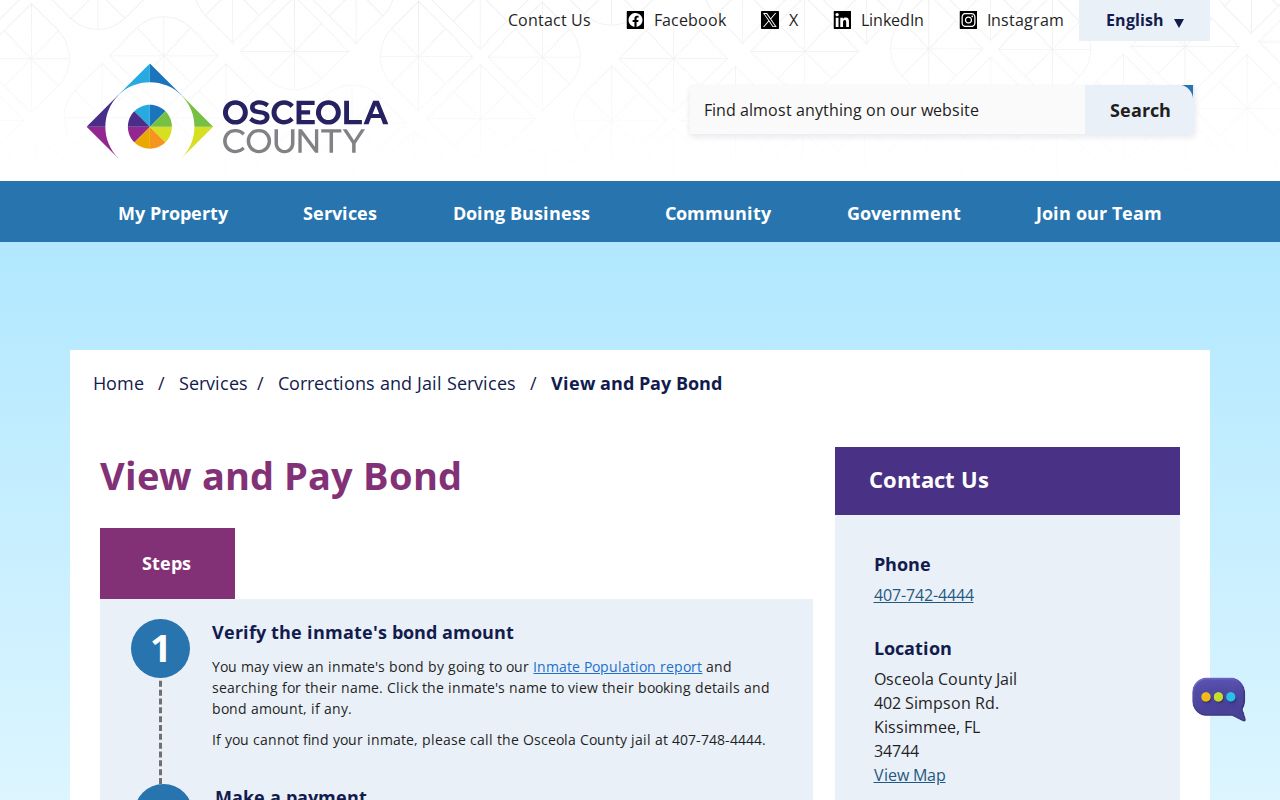
Corrections warns that scammers seek bond or GPS payments through peer-to-peer apps. Verify any demand with the jail, a licensed agent, or the county's official bond route.
The county also publishes visitation and inmate communication rules.
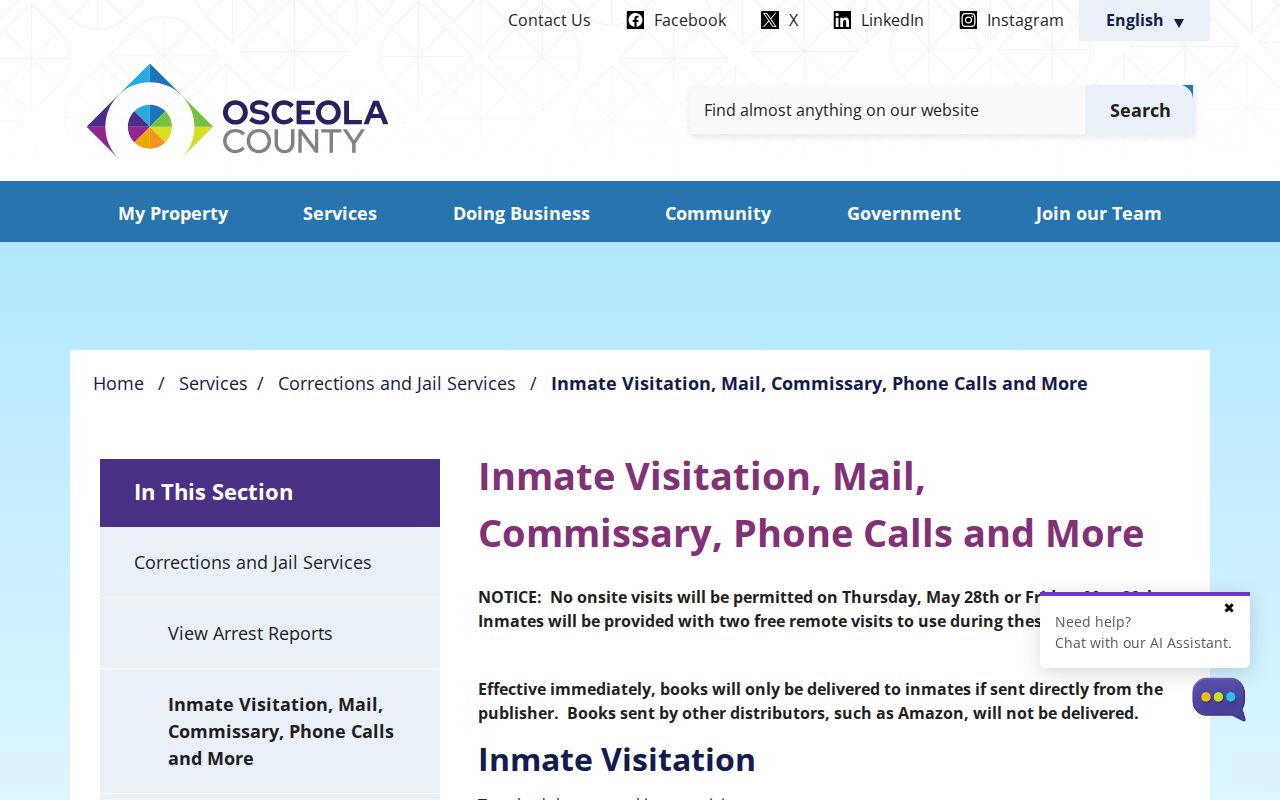
Those rules concern contact with a person in custody. They are not a substitute for a booking record request.